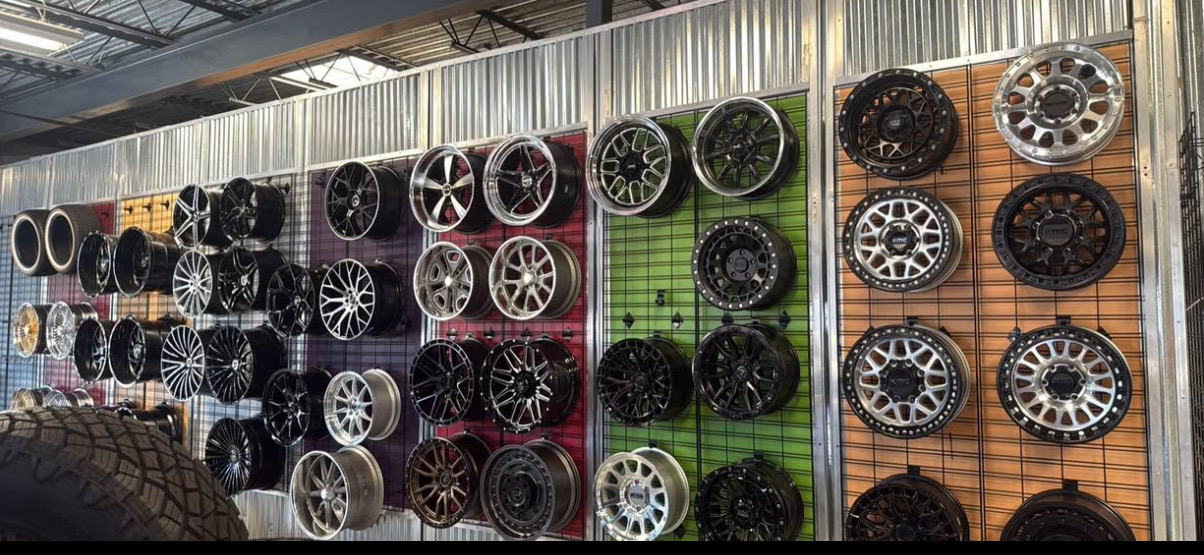
Walk into Tire Geeks and ask about forged vs cast wheels and you will get a real answer - not a sales pitch. The short version: casting is fine for most Sacramento daily drivers, forging is worth every extra dollar if your truck is heavy, big, or getting beat up on the Rubicon Trail. Everything in between is a judgment call that depends on your rig, your use case, and your budget. This article breaks it all down the way we explain it at the counter on Florin Rd and Arden Way every single day.
How Cast, Flow-Formed, and Forged Wheels Are Actually Made
The manufacturing process is where every real difference between these wheels originates. Understanding the "how" makes every other comparison make sense.
Gravity Cast and Low-Pressure Cast Wheels
Gravity casting is the oldest and most common method. Molten aluminum alloy is poured into a mold and allowed to cool. It is fast, relatively cheap, and produces a consistent finished shape. Low-pressure casting (LPDC) uses controlled pressure to push the alloy into the mold rather than relying on gravity alone, which reduces air pockets and produces a denser, more uniform grain structure. Most of the wheels you see on trucks and SUVs in the $300-$600 per wheel range - Fuel Off-Road, Moto Metal, Black Rhino, Method Race Wheels at entry price points - are either gravity cast or LPDC. They are not weak wheels. A properly engineered LPDC wheel handles the loads a daily driver or a moderately built truck will ever see. The limitation is that to achieve a given strength rating, cast wheels need more material, which means more weight.
Flow-Formed Wheels: The Hybrid Middle Ground
Flow-forming (sometimes called flow-forging or rotary forging) starts with a low-pressure cast blank but then uses steel rollers under heat and pressure to stretch and compress the barrel of the wheel. This process aligns the grain structure of the alloy in the barrel walls, making them significantly stronger than a purely cast barrel. The spoke face is still cast, but the barrel - which takes the most flexing load during hard cornering and pothole hits - is essentially forged in its properties. Flow-formed wheels typically land in the $400-$800 per wheel range and offer a strong performance-to-cost ratio. For most Rancho Cordova commuters running Highway 50 daily, flow-formed is genuinely the sweet spot. Brands like Fuel 1PC Flow Forged and Method 305 NV in flow-formed versions live here.
Fully Forged Wheels: Billet Stock, Maximum Density
True forging starts with a solid billet of 6061 or 7075 aluminum alloy. That billet is heated and then pressed under thousands of tons of force into a rough wheel shape. The extreme pressure aligns the grain structure throughout the entire wheel - spokes, face, and barrel - creating a material that is fundamentally denser and more resistant to deformation than cast aluminum. After forging, the wheel is CNC machined to final dimensions. The result is a wheel that can be significantly lighter than a cast wheel at the same strength rating, or dramatically stronger at the same weight. American Force, Asanti, Fuel Forged, DUB Forged, and Weld Racing are the names you hear most often in the forged truck wheel space. You are looking at $1,000-$2,500 per wheel at retail for quality forged pieces, which puts a set of four at $4,000-$10,000 before mounting, balancing, and tires.
Forged vs Cast Wheels: The Weight and Strength Numbers That Matter
Here is where the rubber meets the road, literally. A cast 22x12 truck wheel in a popular offset typically weighs 32-38 pounds. A comparable flow-formed version of the same size might come in at 28-33 pounds. A forged version can often hit 24-28 pounds depending on spoke design. That sounds like a small difference until you understand what unsprung weight actually does to your truck.
Why Unsprung Weight Changes Everything
Unsprung weight is the mass that moves with the wheel - the wheel itself, the tire, the brake rotor, the hub, and the outer half of the axle shaft. Unlike the weight sitting on top of your suspension (your cab, bed, cargo), unsprung weight has to be controlled entirely by the spring and damper reacting to road inputs. Heavier unsprung weight means the suspension takes longer to recover after hitting the railroad crossing on Florin Rd or a rough patch on Business 80. That translates to more bounce, reduced tire contact with the pavement during recovery, and longer braking distances because your tire is momentarily not pressing down evenly. For a lifted truck running 35s or 37s with already-heavy tires, shaving 4-6 pounds per corner with better wheels actually makes a measurable difference in ride quality on the long I-5 stretch from Sacramento to Elk Grove and back.
Strength and Impact Resistance: Bends vs Cracks
This is the practical difference that matters most for off-road use and the kind of hard city driving that Sacramento pavement dishes out. Cast wheels, when they fail, tend to crack. The grain structure in cast aluminum does not deform easily before fracturing. A hard sidewall hit against a curb or a deep pothole impact can crack a spoke or the lip without warning. Forged wheels, because the grain structure is aligned and the material is denser, tend to bend before they break. A bend is repairable in many cases. A crack is not. If you are running big 20x12 or 22x14 negative-offset wheels on a heavy diesel and you are going to push it hard in Carmichael or out on a dirt road toward the Sierra foothills, the ability to bend rather than crack is a real safety and cost consideration. Flow-formed wheels fall in between - the barrel bends relatively well, but the cast face and spokes are still susceptible to cracking under extreme impact.
Cost Reality: What You Are Actually Paying For
Let us be honest about budget because this is where a lot of truck owners get talked into more than they need - or talked out of what they actually want.
A solid set of four quality cast or flow-formed wheels in 20x10 or 22x12 - Fuel Assault, Moto Metal MO970, Method 305 NV - will run you roughly $1,200-$1,800 for the set before tires, mounting, and balancing. Add quality all-terrain tires and you are looking at a complete wheel and tire package in the $2,500-$3,500 range for most trucks. That is the number that works for the majority of Sacramento truck owners who want a sharp custom look without breaking the budget. Check out our wheel and tire packages in Sacramento for current pricing and what fits your specific truck.
Step up to flow-formed and you might add $400-$800 to the wheel cost for a meaningful performance improvement. Still a reasonable investment. Fully forged wheels from American Force, Asanti Off-Road, or similar brands start at roughly $1,000-$1,500 per wheel and go up from there for custom finishes, custom offsets, or larger diameters. A set of four forged 22x14s from American Force on a lifted Ram 3500 or Chevy 2500HD is easily $5,000-$8,000 for wheels alone. That is before tires, before a potential leveling kit, before new lug nuts. We help people put together exactly these builds through our Acima financing program - 60-second application, no traditional credit check, 90-day same-as-cash - because a $6,000 wheel build is easier to stomach as manageable payments than as a single hit.
When Forged Wheels Are Actually Worth the Premium
Forged is not always the answer. But it is the right answer in specific situations, and knowing those situations saves you money and prevents regret either way.
Heavy Trucks at Big Diameters
A 3/4-ton or 1-ton truck - Ram 2500/3500, Ford F-250/350, Chevy/GMC 2500HD/3500HD - puts significantly more load on wheels than a half-ton. When you start running 22-inch or 24-inch diameters with that load rating, the material stress per inch of spoke increases substantially. A cast wheel can be engineered to handle this, but it requires more material (more weight) to achieve the same safety margin that forging provides at less weight. If you are pulling a 16,000-pound trailer down Highway 99 toward Stockton and back, forged wheels are not a luxury - they are appropriate engineering for the task.
Off-Road Use and Trail Running
Anyone running the Rubicon Trail or the dirt roads off of Forest Route 12 toward Loon Lake knows that rocks hit wheels hard, at angles, in ways you cannot predict. The bend-not-crack property of forged aluminum is worth a significant premium when you are 30 miles from the nearest tow truck. Weld Racing and Fuel Forged both have strong off-road lineups designed specifically for this kind of abuse.
Show Builds and Large Custom Diameters
If you are building a show truck and want a 26-inch or 28-inch wheel on a custom suspension, forged is the only responsible choice. At those diameters, the structural demands are extreme, and the visual weight of the wheel has to be balanced against keeping the overall system manageable. American Force does some of the most visually aggressive work at these sizes, and the forging is what makes the designs physically possible without making each wheel weigh 50 pounds.
Popular Brands: Forged vs Cast at Tire Geeks
We stock and order both categories and do not have a horse in the race - we will tell you what actually fits your use case and budget.
Top cast and flow-formed brands we work with: Fuel Off-Road (D-series cast, 1PC flow-formed), Moto Metal (MO970, MO989), Method Race Wheels (305 NV, 305 S), Black Rhino (Barstow, Warlord), KMC Wheels (Rockstar, Machete). These are the brands that make up the majority of custom wheel builds in Sacramento because they deliver great looks and real durability at prices most people can actually work with. For more on choosing between these brands, see our guide on how to choose aftermarket wheels.
Top forged brands we work with: American Force (Independence, Bandit, Vision), Asanti Off-Road (AB811, AB816), Fuel Forged (FF19, FF34), Weld Racing (Cheyenne, Recon). These are the wheels you see on the cleanest builds in the Sacramento area - the ones sitting at car shows in Land Park and Elk Grove that make people stop and take photos. If you are looking at building a truck that turns heads on Arden Way and holds up to real use, this is the tier to work from.
For truck-specific wheel recommendations, our best wheels for trucks in Sacramento post covers current favorites by truck model and use case. If you are deciding between 20-inch and 22-inch before you even get to the forged vs cast question, check our breakdown of 20-inch vs 22-inch wheels.
Daily Driver vs Show Truck: A Decision Framework
Most Sacramento truck owners fall into one of four categories. Here is the honest recommendation for each:
Daily driver, half-ton, budget under $2,500 total: Quality cast or flow-formed wheels are absolutely the right call. You will not notice the weight difference in daily driving, and the cost savings are real. Fuel, Moto Metal, Method - pick the look you want and put the savings toward tires.
Daily driver, half-ton, budget $3,000-$5,000: Flow-formed wheels open up here and make a genuinely worthwhile difference in ride quality, especially if you are also going up in diameter or negative offset. The improved barrel strength is noticeable on Sacramento's rougher surface streets.
Three-quarter ton or one-ton daily driver or work truck: Flow-formed minimum, forged if the budget allows. The load ratings on bigger trucks stress wheels more, and the cost of a failure - damaged truck, damaged trailer, stranded on I-5 - is not worth saving $1,500 on the initial purchase.
Show build, off-road build, or maximum-impact custom: Forged, period. This is the right tool for the job and the investment holds up because the wheels last. A set of American Force wheels maintained properly will outlast the truck they are on. View our full range of wheel and tire services to see everything we offer for custom builds.
Frequently Asked Questions
Are forged wheels actually stronger than cast wheels?
Yes, in a meaningful way. The grain structure of forged aluminum is aligned through the entire wheel under the forging pressure, giving it higher tensile strength and impact resistance than cast aluminum at equivalent weight. The practical result is that forged wheels tend to bend rather than crack under hard impacts, which is both safer and more repairable than a cracked cast spoke.
How much weight do forged wheels save compared to cast?
On a typical 22x12 truck wheel, a quality forged version can be 6-10 pounds lighter than a comparable cast wheel. Multiply that by four corners and you are removing 24-40 pounds of unsprung weight, which makes a noticeable difference in suspension response, ride quality, and braking on Sacramento streets and highways.
Is flow-formed the same as forged?
No, but it is a genuine middle ground. Flow-formed wheels start as cast blanks and then use heat and roller pressure to compress and align the grain structure in the barrel of the wheel. The barrel behaves much like forged material. The face and spokes remain cast. Flow-formed wheels cost more than pure cast but significantly less than fully forged, and they perform noticeably better than cast in barrel strength and weight.
Are forged wheels worth it for a daily driver?
For most half-ton daily drivers in Sacramento, honestly no - unless budget is not a concern or you simply want the absolute best. A quality flow-formed wheel at half the price delivers 90% of the real-world performance benefit. Where forged becomes worth it for daily drivers is on 3/4-ton and 1-ton trucks, at large diameters like 22 inches and up, and on trucks that regularly carry heavy loads or tow.
What forged wheel brands does Tire Geeks recommend for trucks?
American Force is the most popular forged brand we build around for lifted trucks - their fitment range for dually and single-rear-wheel applications is unmatched. Weld Racing is the pick for serious off-road or performance builds. Asanti Off-Road and Fuel Forged are strong choices for show-quality builds that still need real-world durability. Come into either location and we will show you examples and current pricing for your specific truck.
Can I finance forged wheels?
Yes. We offer lease-to-own financing through Acima at both locations - no traditional credit check, about 60 seconds to apply, 90-day same-as-cash with no early payoff penalty. A $6,000 forged wheel set becomes much more manageable as monthly payments, and you can finance the complete package - wheels, tires, mounting, balancing - together. Visit our financing page for details or just ask at the counter.
Come See Us at Either Location
Whether you are leaning toward a solid cast set for your daily Tundra or pricing out American Force forged wheels for a lifted Duramax show build, the best next step is getting eyes on your actual truck and talking through the fitment. We have both categories in stock and can order virtually any forged or cast wheel available. Stop by our South Sacramento shop at 3020 Florin Rd, (916) 800-8786 or our Arden Way location at 2245 Arden Way, (916) 913-8786. Walk in today - no appointment needed. Both locations are open Monday through Saturday, 9 AM to 6 PM. We will pull up fitment data for your exact truck, show you real examples, and put together a complete package quote on the spot. See all our Tire Geeks locations or contact us with questions before you visit.