Classic Car Restoration in Sacramento: Making Old Iron Drive Like It Should
Sacramento has always been a great city for classic car culture. Drive through Land Park on a Sunday morning and you will spot a '69 Chevelle sitting on freshly restored rally wheels. Cruise down Stockton Blvd on a warm evening and you will hear the rumble of a small-block before you see it. The Sacramento region - from Elk Grove up through Carmichael and Fair Oaks, and across to Rancho Cordova - has a deep, active community of vintage enthusiasts who take their builds seriously. At Tire Geeks, classic car restoration in Sacramento is a real part of what we do every week. Not just slapping on some tires - we are talking full brake conversions, suspension refreshes, custom wheel packages, and caliper paint jobs that make show-quality builds actually driveable.
This guide covers the specific services we perform on classic vehicles, why each upgrade matters for Sacramento driving conditions, what the parts and labor actually cost, and how to plan a build that looks clean and stops safely. If you have a muscle car, a classic truck, a hot rod, or a vintage European sitting in your garage, read on.
Why Classic Car Restoration in Sacramento Demands Modern Brakes
Here is the reality: most American cars built before 1975 came from the factory with four-wheel drums, or at best front drums with rear drums as well. Drum brakes made sense for the era. Cars were lighter overall, traffic moved differently, and freeway speeds were regulated at 55 mph. Today you are driving that same 3,600-pound '65 Impala or 3,800-pound '70 Chevelle onto I-5, Business 80, and Highway 50 - roads with 70 mph traffic, sudden slowdowns at the downtown interchange, and the kind of stop-and-go that happens every weekday along Arden Way and Watt Ave.
Drum brakes have two fundamental problems on heavy classics: heat fade and moisture sensitivity. In Sacramento summers - we regularly see 105 to 108 degrees from July through September, with triple-digit stretches that go two weeks straight - drum brakes overheat faster than disc setups. Heat causes brake fluid to boil in the wheel cylinders, which means a soft or fading pedal right when you need it most. Drum brakes are also more susceptible to the wet weather we get from November through March. Water gets trapped inside the drum, glazes the shoes, and you get reduced stopping power exactly when the roads are slick. The Delta breeze keeps overnight temps damp during spring and fall, and cars that sit outside absorb that moisture into exposed wheel cylinders and springs inside the drum assembly.
Front Drum-to-Disc Conversion: What It Involves
A front drum-to-disc conversion on a typical GM A-body, B-body, or full-size truck involves swapping the spindles (or using adapter plates), installing new rotors, calipers, caliper brackets, braided stainless brake lines, and usually a larger-bore master cylinder to match the increased fluid volume a disc system requires. We do a lot of these on '64-72 Chevelles, '67-72 C10 and C20 trucks, '65-70 Impalas, and early Mustangs on the Ford side.
For a typical front disc conversion on a GM A-body we use either factory-correct Granada spindle swaps or bolt-on kit setups from Wilwood or Baer. Wilwood's Dynalite and Superlite series are very popular in the Sacramento build community - they offer excellent heat capacity, are available in drilled/slotted or solid rotor configurations, and come in a range of caliper colors (red, black, silver, polished) that work for both show and street. Baer's Sport Conversion kits are another solid choice for enthusiasts who want an OEM-ish fit with modern performance specs.
Parts cost for a front disc conversion kit runs roughly $650 to $1,400 depending on the brand, rotor size, and whether you need new spindles. Labor at Tire Geeks runs in the range of $250 to $450 for the conversion itself, plus alignment after. A new dual-circuit master cylinder - required for any disc conversion, since the old single-circuit units are a safety liability - typically runs $80 to $180 for a quality unit. We also inspect and often replace the proportioning valve, since the factory unit was calibrated for drums all around and will bias too much pressure to the rear if left unchanged.
Rear Drum-to-Disc Conversion
Rear disc conversions are less common but popular on performance builds and show cars where the owner wants full four-wheel disc for both function and appearance. On a typical GM 10-bolt or 12-bolt rear, this involves a conversion kit that includes new rear caliper brackets, e-brake-style calipers with integral parking brake mechanisms, rotors, and updated rear brake lines. Wilwood, Baer, and Strange Engineering all offer kits for common GM and Ford rear axle housings. Budget $800 to $1,600 for parts plus $300 to $500 labor for a complete rear conversion.
Custom Caliper Packages for Show Cars
A lot of Sacramento show-car builders want their brake setup to be visible through the wheels and look as good as the paint. We offer custom brake caliper packages that include high-temp caliper painting in single or two-tone colors, chrome caliper covers for budget builds, or powdercoat finishes that hold up to wheel well heat. Common choices are gloss red, gloss black, anodized blue, and gold - which pairs especially well with polished or chrome five-spoke wheels on a lowered classic. On show cars going through judging at events like the Sacramento Autorama or the Elk Grove Western Festival car show, the brake and wheel combination is part of the overall score.
Suspension Modernization: Ride Quality, Handling, and Sacramento Roads
Fifty-year-old suspension geometry was designed around bias-ply tires and relatively soft roads. Modern radial tires, wider wheels, and Sacramento's mix of freeway ramps, railroad crossings (those rough crossings on Florin Rd near Highway 99 will test any classic suspension), and long straight agricultural roads outside the city all demand better control than original soft springs and recirculating-ball steering can provide.
Lowering and Spring Replacement
Most builds start with a drop. For classic muscle cars and full-size cars, we typically see owners wanting a 2-inch to 3-inch drop in the front and 1 to 2 inches in the rear - enough to eliminate the factory body roll and get the wheel-in-wheel-well fitment right without scraping on speed bumps or the angled driveways throughout Arden-Arcade and the older neighborhoods in Campus Commons. We use drop spindles (which lower the car without increasing negative camber the way cut springs do), lowering spring sets from Hotchkis, Edelbrock, and Classic Performance Products, and matching front and rear shocks from Bilstein or KYB.
Hotchkis Sport Suspension kits for common GM and Ford classics include progressive-rate front and rear springs, front and rear sway bars, and urethane bushing sets. A complete Hotchkis Stage 2 kit for a '68-72 Chevelle runs roughly $1,100 to $1,400 in parts - it includes everything needed for a significant handling improvement without requiring frame modifications. Labor for full spring, sway bar, and bushing install is typically $400 to $650 depending on the vehicle.
Shocks and Struts
Original shocks on a 40-year-old car are almost always blown. Worn shocks on a classic are not just a comfort issue - they cause the front end to float and dive, which makes disc brake conversions less effective because the car transfers weight unevenly during hard stops. We typically recommend Bilstein B6 heavy-duty shocks for street performance use. On trucks, Bilstein 5100 series offers adjustable ride height at the front - useful for owners who want to fine-tune the nose height after the springs are installed. Shock replacement runs $60 to $140 per corner for parts and $60 to $100 per corner for labor on most classic applications.
Tubular Control Arms and Subframe Connectors
Stamped steel factory control arms on early A-body and B-body GM cars are notorious for flexing under aggressive driving and for having geometry that causes camber change during suspension travel. Tubular control arms from Global West, Hotchkis, or UMI Performance fix both problems. The tubular design is significantly stiffer than factory stampings, and the improved geometry keeps the tire flatter during cornering - which matters on the sweeping on-ramps of Capital City Freeway and the faster curves on Highway 50 eastbound toward Rancho Cordova. Tubular upper and lower control arm sets run $400 to $900 depending on manufacturer and application. Labor for a full four-corner control arm swap on an A-body runs $500 to $800, since every arm requires a new alignment after installation.
Subframe connectors are a must on any unibody GM car that is being driven aggressively or built for shows. The factory unibody flex is significant - you can feel it as a shimmy or vibration over rough pavement. Global West and UMI both make weld-in and bolt-in subframe connector kits. Weld-in units are stronger but require a lift and welding equipment. Bolt-in units are a good option for owners who want the rigidity improvement without permanent modification. Parts run $180 to $350; installation with welding runs $200 to $400.
Wheel and Tire Packages for Classic Builds
The wheel and tire combination defines the look of a classic build more than almost any other single decision. Get it wrong - wrong offset, wrong backspacing, wrong tire width - and the car looks awkward and may rub on the inner fenders or drop spindles you just installed. Get it right and the build looks intentional and finished.
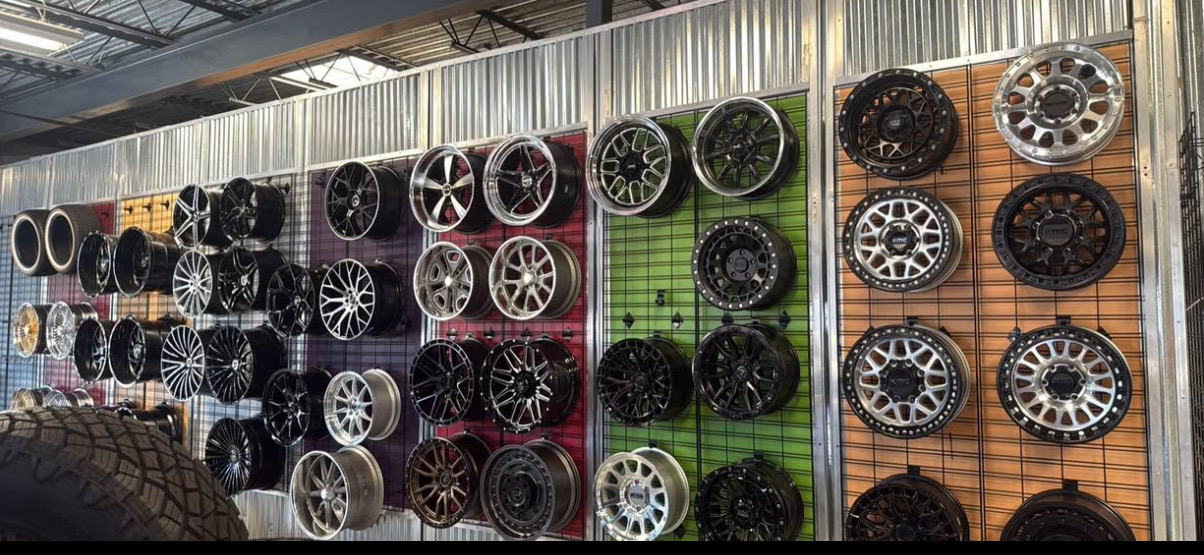
We do a full fitment consultation on every classic wheel and tire job, measuring the stock or modified backspacing, checking the available clearance in the wheel well, and accounting for any suspension lowering already done or planned. Common classic wheel choices we stock and order at Tire Geeks:
- Budnik, Billet Specialties, and US Mags: billet aluminum one-piece wheels in classic five-spoke, smoothie, and wire-mesh designs. These are the standard for street rods and custom builds. Sizes from 15x7 to 20x9. Prices from $280 to $600 per wheel.
- American Racing Torq Thrust: the definitive classic muscle car wheel. Available in chrome, polished, and traditional grey/machined finish. 15 to 18 inch. $150 to $300 per wheel. A set of four 15x8 Torq Thrusts on a '69 Chevelle in polished finish is still one of the best-looking combinations in the hobby.
- Weld Racing: popular on Sacramento drag cars that also cruise. Weld S71 and S77 series are common on classic trucks and muscle cars that run at Sacramento Raceway on weekends and cruise Watt Ave on Saturday nights.
- Reproduction factory rallye wheels and steelies: for restoration-correct builds, we source reproduction Rallye wheels, dog-dish caps, and painted steelies in factory sizes like 15x7 and 15x8.
For tires on classic applications, we stock and order a wide range of options. BFGoodrich Radial T/A in the classic raised-white-letter look is one of the most popular for muscle cars - available in sizes like 245/60R15, 255/60R15, and 275/60R15 for the rear. Coker Classic reproduces original bias-ply look in a radial construction for show-quality restoration builds. Mickey Thompson and Nitto make a range of performance radials that work on lowered classics running wider rear tracks. Read more about selecting the right rubber in our classic car tires and wheels Sacramento guide.
We handle all mounting, balancing, and fitment checks in-house. Classic steel wheels require a specific balancing technique - the adhesive weights that go on alloy wheels do not work properly on painted steel. We use clip-on weights on the correct locations so the finish is not marred. See our lowering guide for details on how suspension changes affect your wheel and tire fitment requirements.
Sacramento Classic Car Culture: Where These Builds Go
Tire Geeks customers with classic builds are active in the local scene. The Sacramento cruise night and car show circuit runs from early spring through late October. Some of the events these builds show up at regularly:
- Old Town Sacramento cruise nights: along the waterfront on summer evenings, usually Friday and Saturday. A mix of classic muscle, hot rods, and lowriders.
- Elk Grove Western Festival car show: one of the largest outdoor shows in the region. Hundreds of entries, judged and open class, in late May/early June.
- Sacramento Autorama: the indoor show held at Cal Expo each winter. Show-quality builds and custom paint are standard here.
- Sacramento Raceway Park: on Elverta Rd in North Highlands. Friday night drags and test-and-tune sessions bring out classic muscle that gets driven hard. Builds that look good and actually go fast are the standard.
- Local cruise nights in Carmichael and Fair Oaks: smaller neighborhood events that run through the summer, usually organized through Sacramento area car clubs.
A lot of builds we work on at Tire Geeks are dual-purpose: they are nice enough to show but still get driven on weekends. That means the brake and suspension work has to be done correctly, not just look good through the wheels. Show-quality caliper paint on a drum-to-disc conversion that was done sloppily is a combination that will fail at the worst time - like merging from Business 80 onto I-5 south with a heavy vehicle behind you.
Why Enthusiasts Trust Tire Geeks for Their Classic Builds
Classic car work requires understanding what the vehicle originally had, what modifications have already been done, and how a new change will interact with the existing setup. We have seen builds come in where a previous shop installed a disc conversion but left the original single-circuit master cylinder - a genuine safety hazard. We have seen wheel and tire packages where the offset was wrong and the tire was contacting the inner fender liner at full lock. We catch these things because we look at the whole car, not just the part being ordered.
Our shops at 3020 Florin Rd and 2245 Arden Way both handle classic car work on a walk-in basis - no appointment required. If you want to discuss a multi-stage build, we can walk through the sequence of work (brakes first, then suspension, then wheels and alignment) so each stage is done in the right order and nothing has to be undone later. We also offer financing through Acima - no traditional credit check, 90-day same-as-cash option - which makes it practical to do a more complete build upfront rather than piecing it together over multiple visits. Check our full services list to see everything we handle, and visit our locations page for hours and directions to both shops.
Have questions about a specific build or want to bring the car in for an assessment? Contact us before you order parts - we have seen too many builds where the customer ordered a wheel and tire package that would not fit the spindles they were planning to install, or a brake kit that required a proportioning valve not included in the kit. A quick conversation saves expensive mistakes.
Frequently Asked Questions
How much does a front drum-to-disc conversion cost on a classic car in Sacramento?
Plan on $900 to $2,000 all-in for parts and labor on a typical American classic - A-body GM, B-body GM, classic Ford Mustang, or first-gen F-100/F-150. That range covers quality parts (Wilwood, Baer, or similar), installation labor, a new master cylinder, braided lines, and alignment after. Budget kits using lower-quality imported hardware run cheaper but tend to have fitment issues and shorter service life. We use name-brand hardware on every conversion we do.
Do I need a new master cylinder when I convert to front disc brakes?
Yes, always. A disc system requires more fluid volume than drums, and the original single-circuit master cylinders on pre-1967 cars are also a safety issue - if one circuit fails, you lose all braking. A dual-circuit master cylinder is required for any disc conversion, and it needs to be sized correctly for your specific rotor and caliper combination. We handle master cylinder selection and installation as part of every brake conversion.
Will lowering my classic car hurt the ride quality on Sacramento streets?
A properly done lowering job - with matched springs, new quality shocks, and correct alignment - typically improves the driving experience compared to 40-year-old worn factory suspension. The car sits flatter, body roll is reduced, and tire contact patch stays more consistent. Where ride quality degrades is when the drop is too aggressive for the wheel well clearance, or when cheap springs are used without replacing the worn shocks. Sacramento streets in Arden-Arcade and South Sacramento have their share of rough patches and railroad crossings - we factor that into our suspension recommendations so you are not bottoming out on Florin Rd.
What is the best wheel size for a classic muscle car build in Sacramento?
15-inch wheels in a 7-inch or 8-inch width are the traditional standard for pre-1973 muscle cars - they maintain the period-correct look and accept the widest range of BFGoodrich T/A and similar classic-profile tires. For builds that want a more modern stance with bigger rubber, 17-inch and 18-inch wheels work well if the suspension has been updated, since the shorter sidewall on a 17-inch tire requires better road manners from the suspension to avoid a harsh ride. We do a lot of 15x8 rear and 15x7 front setups on A-body and B-body GM cars, and 17x8 or 18x9 setups on builds going for a more contemporary modified look.
Can I get caliper painting done at Tire Geeks, and how long does it last?
Yes. We apply high-temperature brake caliper paint in a range of colors - gloss red, gloss black, anodized blue, silver, and gold are the most common requests from our classic car customers. For show builds we also do two-stage finishes with stenciled lettering. A proper caliper paint job using quality high-temp paint lasts two to four years on a street-driven car. Show cars that are trailered and rarely driven will see the paint last much longer. The job requires clean, degreased calipers and multiple light coats with full cure time between coats - we do not rush the process.
Does Tire Geeks do classic car work on both locations, or just one?
Both locations handle classic car brake, suspension, and wheel and tire work. The Florin Rd shop in South Sacramento and the Arden Way shop in the Arden area are both fully equipped for alignments, brake conversions, and suspension work on classic vehicles. Either location can take walk-in consultations - bring the car in and we will look it over and give you a specific recommendation rather than a generic quote.
Book Your Classic Car Service at Tire Geeks
Tire Geeks serves Sacramento's classic car enthusiasts at two convenient locations. Visit us at 3020 Florin Rd, (916) 800-8786 in South Sacramento, or at 2245 Arden Way, (916) 913-8786 in the Arden area. Both shops are open Monday through Saturday, 9 AM to 6 PM. Walk in today - no appointment needed. Whether you are planning a full brake conversion, a suspension refresh, a custom wheel and tire package, or all of the above, we will walk through the options with you and give you a straight answer on what will work and what will not. Sacramento classic car restoration starts with getting the mechanical work done right, and that is what we do every day.